How can caregivers encourage good eating habits for seniors<span class="fr-marker" data-id="0" data-type="true" style="display: none; line-height: 0;"></span><span class="fr-marker" data-id="0" data-type="false" style="display: none; line-height: 0;"></span<span class="fr-marker" data-id="0" data-type="true" style="display: none; line-height: 0;"></span><span class="fr-marker" data-id="0" data-type="false" style="display: none; line-height: 0;"></span<span class="fr-marker" data-id="0" data-type="true" style="display: none; line-height: 0;"></span><span class="fr-marker" data-id="0" data-type="false" style="display: none; line-height: 0;"></span<span class="fr-marker" data-id="0" data-type="true" style="display: none; line-height: 0;"></span><span class="fr-marker" data-id="0" data-type="false" style="display: none; line-height: 0;"></span<span class="fr-marker" data-id="0" data-type="true" style="display: none; line-height: 0;"></span><span class="fr-marker" data-id="0" data-type="false" style="display: none; line-height: 0;"></span<span class="fr-marker" data-id="0" data-type="true" style="display: none; line-height: 0;"></span><span class="fr-marker" data-id="0" data-type="false" style="display: none; line-height: 0;"></span<span class="fr-marker" data-id="0" data-type="true" style="display: none; line-height: 0;"></span><span class="fr-marker" data-id="0" data-type="false" style="display: none; line-height: 0;"></span<span class="fr-marker" data-id="0" data-type="true" style="display: none; line-height: 0;"></span><span class="fr-marker" data-id="0" data-type="false" style="display: none; line-height: 0;"></span<span class="fr-marker" data-id="0" data-type="true" style="display: none; line-height: 0;"></span><span class="fr-marker" data-id="0" data-type="false" style="display: none; line-height: 0;"></span<span class="fr-marker" data-id="0" data-type="true" style="display: none; line-height: 0;"></span><span class="fr-marker" data-id="0" data-type="false" style="display: none; line-height: 0;"></span<span class="fr-marker" data-id="0" data-type="true" style="display: none; line-height: 0;"></span><span class="fr-marker" data-id="0" data-type="false" style="display: none; line-height: 0;"></span<span class="fr-marker" data-id="0" data-type="true" style="display: none; line-height: 0;"></span><span class="fr-marker" data-id="0" data-type="false" style="display: none; line-height: 0;"></span<span class="fr-marker" data-id="0" data-type="true" style="display: none; line-height: 0;"></span><span class="fr-marker" data-id="0" data-type="false" style="display: none; line-height: 0;"></span<span class="fr-marker" data-id="0" data-type="true" style="display: none; line-height: 0;"></span><span class="fr-marker" data-id="0" data-type="false" style="display: none; line-height: 0;"></span<span class="fr-marker" data-id="0" data-type="true" style="display: none; line-height: 0;"></span><span class="fr-marker" data-id="0" data-type="false" style="display: none; line-height: 0;"></span<span class="fr-marker" data-id="0" data-type="true" style="display: none; line-height: 0;"></span><span class="fr-marker" data-id="0" data-type="false" style="display: none; line-height: 0;"></span<span class="fr-marker" data-id="0" data-type="true" style="display: none; line-height: 0;"></span><span class="fr-marker" data-id="0" data-type="false" style="display: none; line-height: 0;"></span<span class="fr-marker" data-id="0" data-type="true" style="display: none; line-height: 0;"></span><span class="fr-marker" data-id="0" data-type="false" style="display: none; line-height: 0;"></span<span class="fr-marker" data-id="0" data-type="true" style="display: none; line-height: 0;"></span><span class="fr-marker" data-id="0" data-type="false" style="display: none; line-height: 0;"></span<span class="fr-marker" data-id="0" data-type="true" style="display: none; line-height: 0;"></span><span class="fr-marker" data-id="0" data-type="false" style="display: none; line-height: 0;"></span<span class="fr-marker" data-id="0" data-type="true" style="display: none; line-height: 0;"></span><span class="fr-marker" data-id="0" data-type="false" style="display: none; line-height: 0;"></span<span class="fr-marker" data-id="0" data-type="true" style="display: none; line-height: 0;"></span><span class="fr-marker" data-id="0" data-type="false" style="display: none; line-height: 0;"></span<span class="fr-marker" data-id="0" data-type="true" style="display: none; line-height: 0;"></span><span class="fr-marker" data-id="0" data-type="false" style="display: none; line-height: 0;"></span<span class="fr-marker" data-id="0" data-type="true" style="display: none; line-height: 0;"></span><span class="fr-marker" data-id="0" data-type="false" style="display: none; line-height: 0;"></span<span class="fr-marker" data-id="0" data-type="true" style="display: none; line-height: 0;"></span><span class="fr-marker" data-id="0" data-type="false" style="display: none; line-height: 0;"></span<span class="fr-marker" data-id="0" data-type="true" style="display: none; line-height: 0;"></span><span class="fr-marker" data-id="0" data-type="false" style="display: none; line-height: 0;"></span<span class="fr-marker" data-id="0" data-type="true" style="display: none; line-height: 0;"></span><span class="fr-marker" data-id="0" data-type="false" style="display: none; line-height: 0;"></span<span class="fr-marker" data-id="0" data-type="true" style="display: none; line-height: 0;"></span><span class="fr-marker" data-id="0" data-type="false" style="display: none; line-height: 0;"></span<span class="fr-marker" data-id="0" data-type="true" style="display: none; line-height: 0;"></span><span class="fr-marker" data-id="0" data-type="false" style="display: none; line-height: 0;"></span<span class="fr-marker" data-id="0" data-type="true" style="display: none; line-height: 0;"></span><span class="fr-marker" data-id="0" data-type="false" style="display: none; line-height: 0;"></span<span class="fr-marker" data-id="0" data-type="true" style="display: none; line-height: 0;"></span><span class="fr-marker" data-id="0" data-type="false" style="display: none; line-height: 0;"></span>
Caregivers play a vital role in a senior’s well-being, and proper nutrition is key to keeping them physically and mentally strong. Stress and fatigue — especially when appetite or dietary preferences change — can make this challenging. But maintaining good nutrition benefits both your loved one and you. Below, find answers to common caregiver questions to help you succeed.
What are primary caregiver’s responsibilities regarding nutrition?
Your role in nutrition depends on the level of care your older adult needs. If they can’t shop, cook, or plan meals — and no nutritionist is involved — you may manage these tasks, making your responsibility for proper nutrition essential. Knowing the best and worst diets for people over 60 is key, and fortunately, plenty of resources are available to guide you.
What nutrients do older people need most?
Bodies change as they age. Physical activity declines, followed by muscle and bone loss. Older adults require fewer calories, which means you must supply specific vitamins and minerals to help counteract your loved one’s changes and combat disease. Among the nutrients older adults need most are:
- Calcium: The ability to absorb calcium decreases with age, so it’s crucial to get the recommended daily amount to protect bones, muscles, and nerves.
- Vitamin D: While the sun is a great source of vitamin D in younger years, older adults’ skin isn’t as great at creating it. It’s necessary because it keeps the immune system strong and supports the body’s ability to absorb calcium.
- Fiber: While age climbs, metabolism lowers. This makes fiber ever more important for proper digestion and to regulate cholesterol and blood sugar.
- Vitamin B12: Stomach acid also declines with age, which affects absorption of vitamin B12, a nutrient necessary for mobility and cognitive function.
- Potassium: This mineral — another must for bone health — also maintains cell function, regulates blood pressure, and prevents kidney stones. For those with kidney disease, it’s vital they get the right amount to avoid heart issues.
What are the most nutritious foods for seniors?
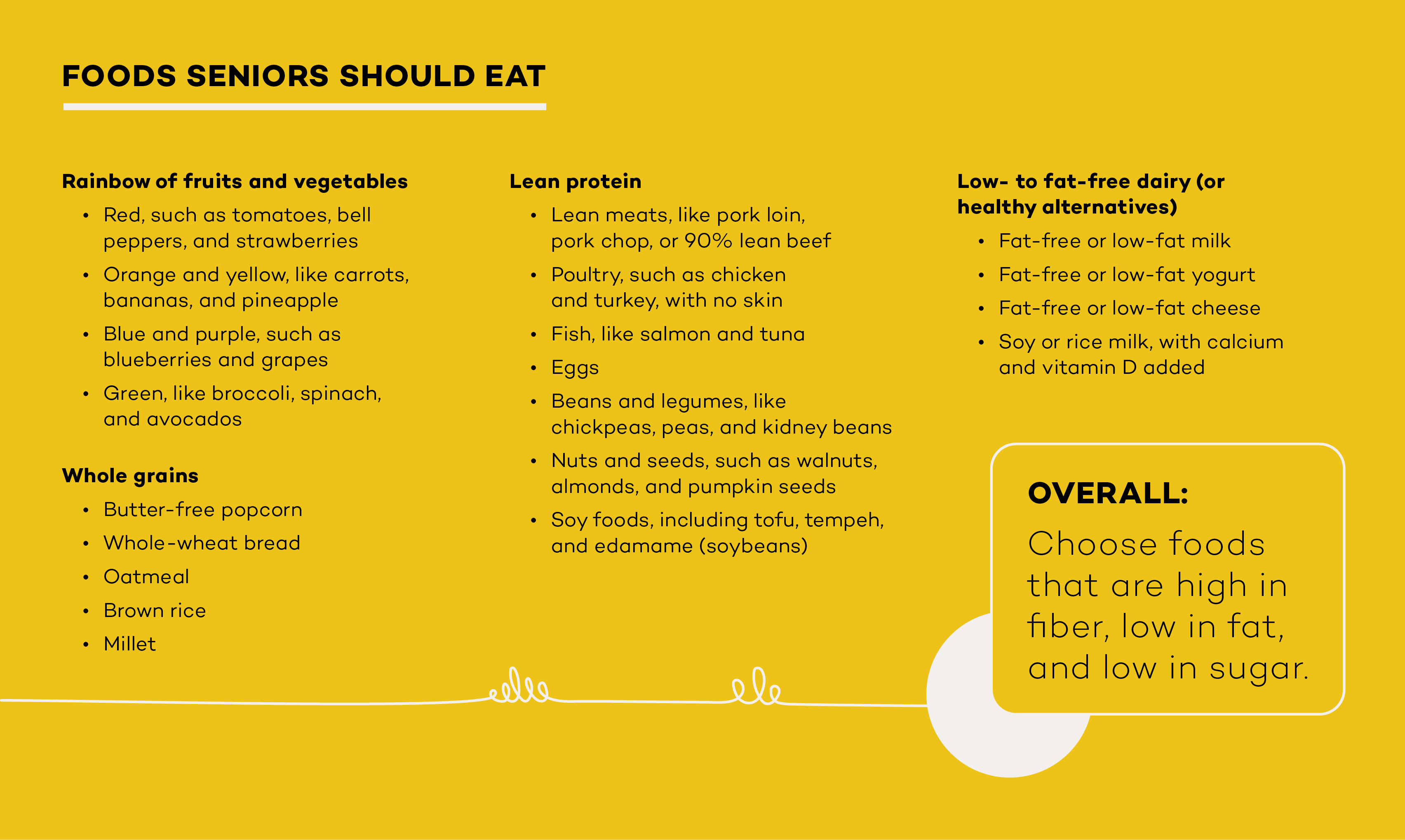
The foods your senior should eat more of fall under four distinct categories. Each group delivers one or more of the most important nutrients. Serve foods together to ensure your loved one has a well-rounded diet.
- Fruits and vegetables of all colors: The color of your produce can reveal its benefits. For example, the red hue of tomatoes and strawberries makes them beneficial for heart health, while green usually signals a source of fiber.
- Dairy products (or alternatives): Serving milk, yogurt, and cheese provides necessary calcium. Look for low- and non-fat items to help ensure a healthy weight and, when applicable, fortified with vitamin D to help absorb calcium.
- Lean protein: Various protein options are available to help get vitamin B12 and other essential nutrients. Among them are pork, beef, poultry, eggs, fish, or even beans, nuts, and seeds, making it easy to meet any dietary preference.
- Whole grains: Making simple swaps to whole grains, like white rice to brown rice or white bread to whole wheat, can have big benefits. These include less inflammation, more energy, and reduced risk of diseases, like diabetes.
How can caregivers improve nutrient intake for seniors?
Create a well-balanced plate to get the right amount of nutrients for older adults. You can do this by filling one half of the plate with vegetables and fruit, and the other half should be split evenly between lean protein and a serving of whole grains.
You can also provide healthy snacking options, such as air-popped popcorn instead of chips. Apple slices, berries, and nuts are also great choices.
What are the three most important foods for healthy aging?
Various sources tout different foods as the best for healthy aging. The National Council on Aging says the top three are dark leafy greens, such as spinach and kale; cruciferous vegetables, like broccoli and Brussels sprouts; and blueberries. That’s because each, on its own, contains vitamins and minerals to fulfill many nutritional needs. However, other lists also include extra-virgin olive oil, green tea, and fatty fish among the most important.
The common link among all those named is that they’re not ultra processed. They don’t contain unhealthy fats, sodium, or added sugar. Instead, they contribute vital nutrients to the diet. This makes the most important foods for healthy aging plant-based and lean animal-based options.
How do you encourage an older person to eat healthy food?
Keeping mealtimes exciting isn’t the only barrier you’ll need to overcome to encourage your loved one to eat well:
- Budget concerns due to costs: While fresh produce can be pricy, eating healthy doesn’t have to be. You can get many of the best foods for seniors at low costs when you choose frozen or canned produce.
- Lack of education on senior nutrition: Shopping for groceries and preparing a balanced diet can be overwhelming, but resources are available to help. These include MyPlate.gov, which will tell you how many servings of each food group are necessary based on weight, height, and physical activity.
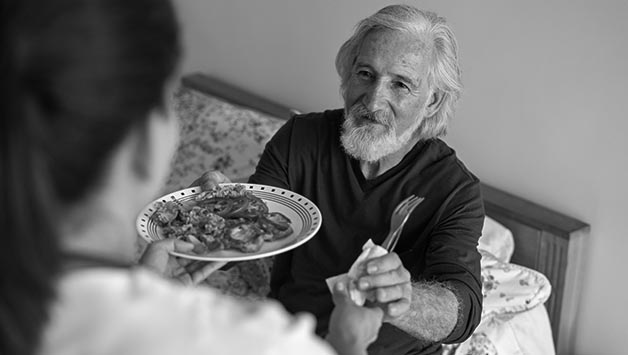
- No support: As a caregiver, you have influence on how your older adult responds to nutrition. When you set a good example and eat what you’re serving, you encourage them to do the same.
If you still have challenges, you can find new ways to incorporate fruits and vegetables, such as adding them to pizza or pasta. You can also make fruit smoothies with yogurt to hide spinach or kale, which they shouldn’t be able to taste. If obstacles persist, you may wish to review their eating habits to see if you can make improvements.
How can caregivers encourage good eating habits for seniors?
To help seniors eat nutritious foods, you may need to fine-tune how they eat in general. Consider whether you need to:
- Establish a schedule: Does your loved one eat at the same time each day? If not, getting on a regular eating schedule can help them look forward to mealtimes.
- Serve smaller meals often: Small portions can be less overwhelming, especially when introducing new foods. Serving five small meals versus three large ones may also help prevent digestive issues.
- Encourage physical activity: Exercise has been proven to regulate appetite in older adults. Help your loved one move daily in any capacity that they’re able.
- Make mealtimes social: Having a companion at mealtimes, whether you or another friend or family member, can make dining more enjoyable. When you eat healthily, the rewards are greater.
Photo credit: iStock